
We’ve all heard the expression: That’s like comparing Apples and Oranges.1 They are two incomparably different fruits.
Our intention on this page is not to compare apples and oranges, which are very different indeed. But when it comes to pruning they are both fruit trees. And fruit trees, as we shall see, can be pruned mercilessly and bear fruit on new growth the following year.
The art and science of pruning apple trees has developed over millennia.2 And as the science of pruning agricultural food crops has developed, the trees themselves have adapted to accommodate the pruning.

In the image below it is difficult to recognize the form as an apple tree. The plants have become smaller and smaller and at the same time, more productive. Is it correct to call this form a tree?
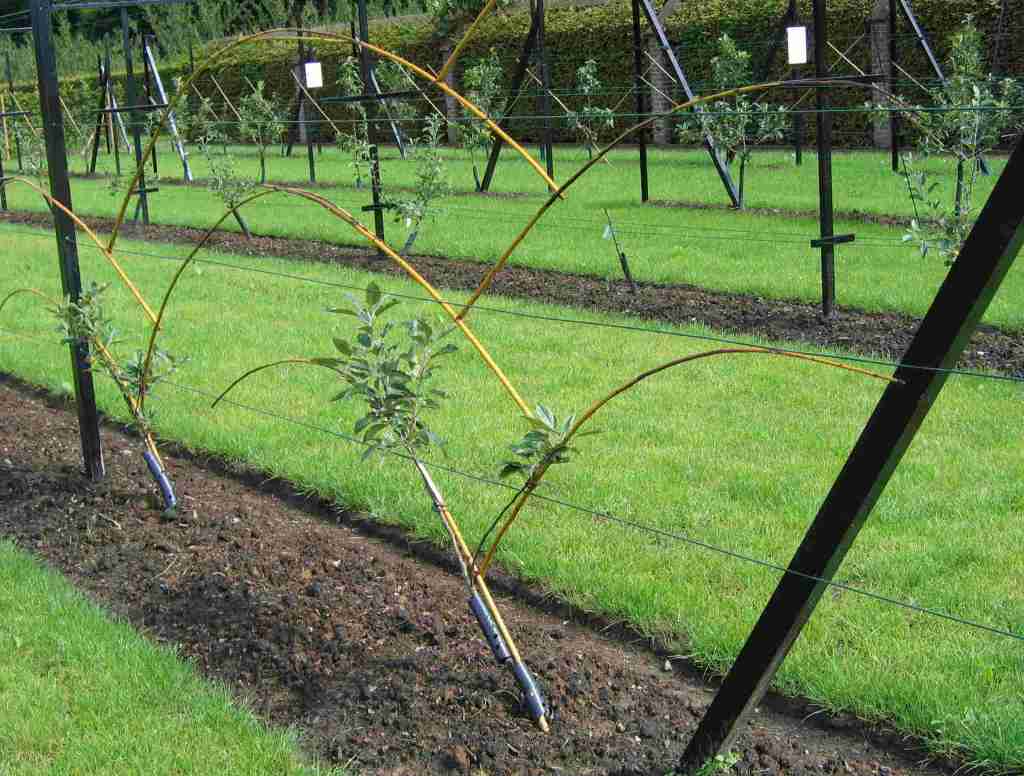

Below: This apple tree is pruned back to the main branches each year, yet continues to bear fruit on new shoots each year.
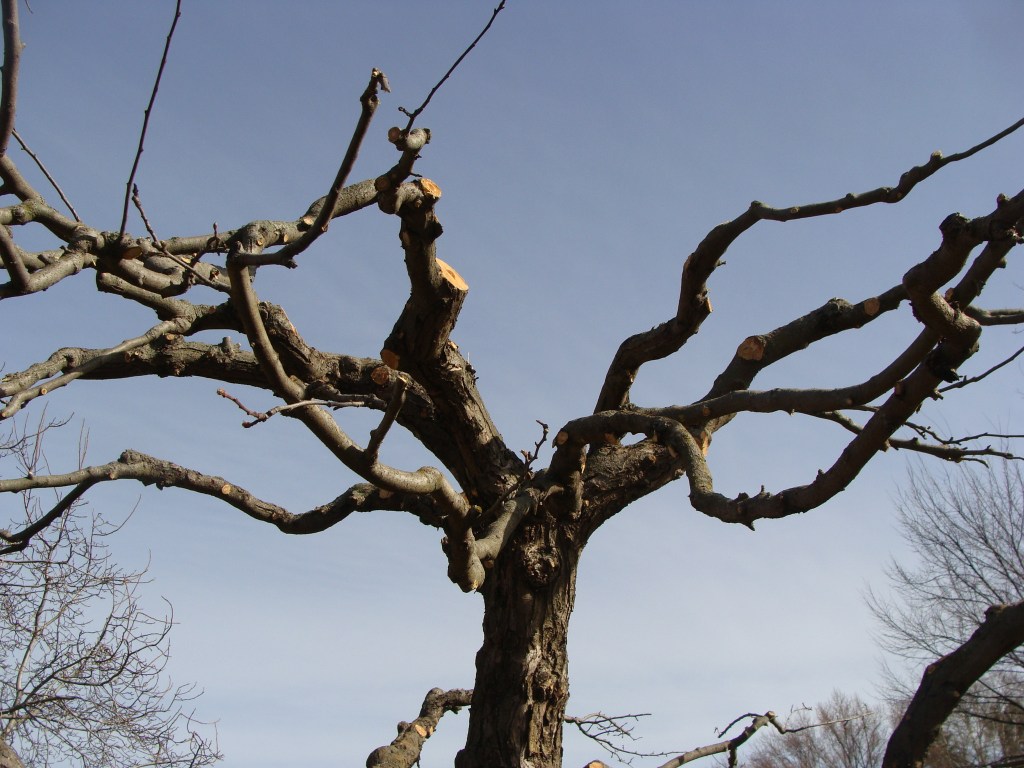
These apple trees may be deformed, even ugly to some of us. But the purpose of an apple tree (or any other agricultural food crop) is to economically produce a crop.

What is the purpose of a Street Tree?
A street tree (as opposed to a fruit tree) is a tree planted on the public ROW (Right-of-Way). To discover the purpose and cultural requirements for street trees refer to other pages on this forum.
NOTES:
- A comparison of apples and oranges occurs when two items or groups of items are compared that cannot be practically compared, typically because of inherent, fundamental and/or qualitative differences between the items. Wikipedia
- This page was published after Tree People received comments supporting (or apologizing for) historic pollarding and hatracking. The page is intended as a companion piece to our pages “Hatracking” and “The History of Pruning“.
- The terms “street tree” or “amenity tree” on this page refers specifically to deciduous broadleaf urban canopy trees, excluding fruit bearing trees. Conifers rarely if ever require pruning.
 Tree People of Walla Walla