
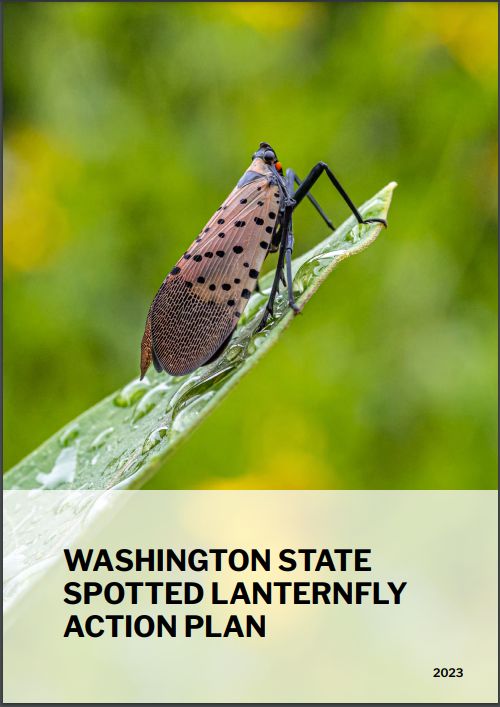
The Spotted Lanternfly arrived in North America in 2014 from China with a shipment of paving stones. The invasive insect depends on humans to extend its range, primarily by hitchhiking on commercial goods.
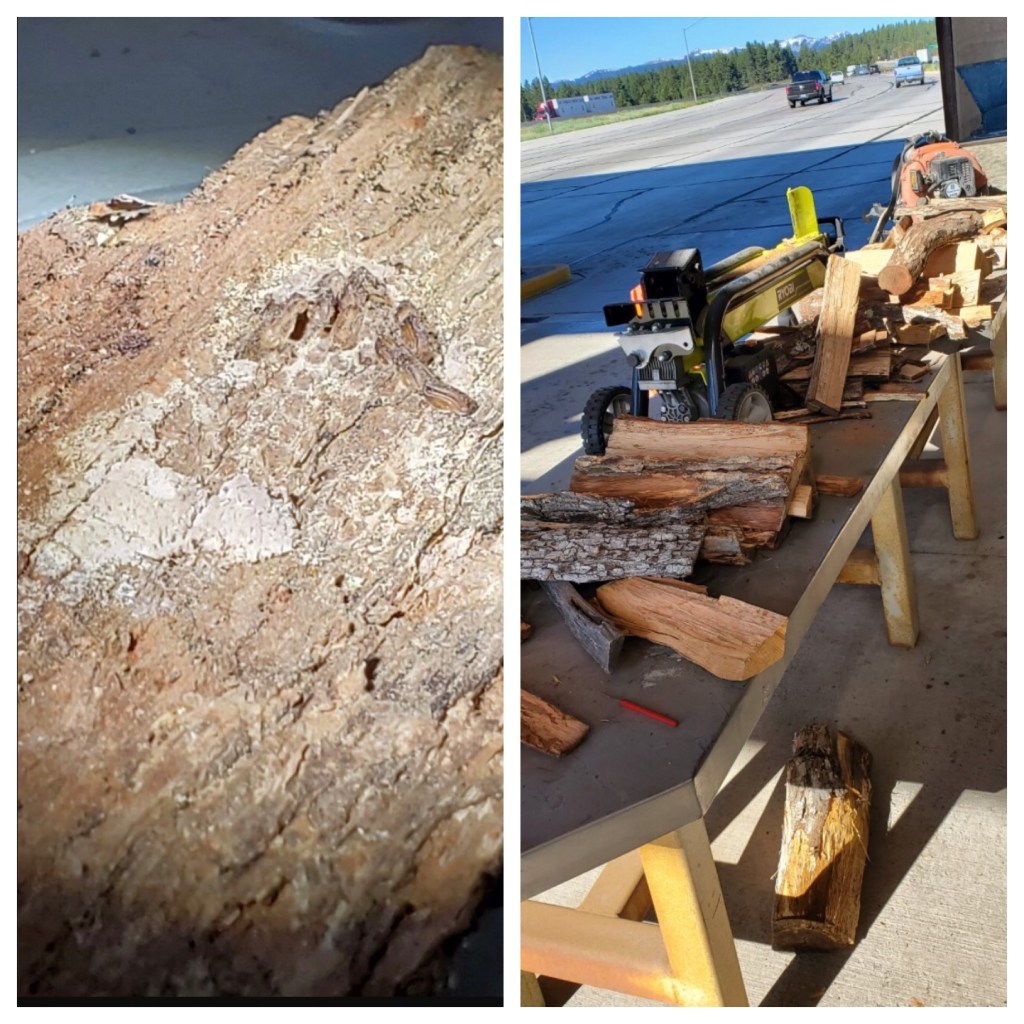
SLF will lay eggs on any hard surface, including vehicles (cars, boats, trailers, etc.), stones, metal, yard waste, landscaping materials, packing materials, and patio furniture. In 2020 an egg mass was intercepted at a CFDA inspection station in Truckee, CA.1 The eggs arrived on a load of firewood which originated in New Jersey.
In October, 2020, a dead SLF female was found in a shipment of planters and ceramic pots sent to Oregon from Pennsylvania.2
There have been reports of SLF sightings in Washington State, but no documented sightings.

One source suggests the SLF will reach California by 20273 and be established across the western wine growing regions by 2033.
west coast states prepare for the SLF
Since the introduction of the Spotted Lanternfly to North America in 2014 Pennsylvania has led the nation in SLF research and planning.
It is not possible to review all the SLF documents available. However, there is a universal consensus that the most effective method of SLF control is to control the primary host plant, the Ailanthus.
The USDA Forest Service has long recognized the threat posed by Ailanthus to agriculture and native forests. Publications from the five FS research stations across the country have offered control strategies.4 A recent report from the Northern Research Station offers hope for long-term control.5
As the scale and nature of the threat posed by SLF became clear to the rest of the country, jurisdictions at every level have been responding.
Listed below are a selection of documents from the federal level down to the county level.
caution!
Documents listed below may contain information that is misleading or inaccurate. Above all, be prudent in your control strategies or you may cause the Ailanthus to spread.
For example, some documents recommend that if Ailanthus is discovered, ” . . . it should be removed immediately.” This gives the impression that you should immediately take a chainsaw to any and all Ailanthus you find. This is not the case. Proper removal requires killing the tree BEFORE removal, which may take up to a year.
In addition, some documents endorse foliar herbicide spray; it should be noted that foliar herbicide is effective ONLY on massed seedlings.
The Underwood Conservation District in Washington State makes it very clear that care must be taken to avoid spreading rather than eliminating the host tree :
NOTE Do not just cut or mow Tree of Heaven: it will prolifically sucker, and you’ll end up with a hydra-headed nuisance.
— Underwood Conservation District
Federal
In addition to the Forest Service Management Strategies, the USDA Animal and Plant Health Inspection Service has published a 5-year SLF control strategy:

California

oregon
“Oregon Department of Agriculture (ODA) is not offering control suggestions at this time due to our intention to prevent the pest from establishing in Oregon.”
washington
Conservation districts
There are 45 Conservation Districts in the State of Washington. These districts coordinate assistance from all available sources – public and private, local, state, and federal – in an effort to develop locally-driven solutions to natural resource concerns. In some communities the Noxious Weed Control Boards are taking the lead in eradication of Ailanthus. As such, these two are the local, boots-on-the-ground organizations that should be called upon to confront the Ailanthus.
Among the Conservation Districts whose SLF control strategies we’ve reviewed the Underwood Conservation District provides a model for other jurisdictions to follow.
Recommendations
The recommended best management practices for controlling Tree of Heaven are:
- Columbia Gorge Cooperative Weed Mgmt. Area: Tree of Heaven
- Underwood Conservation District:
TOH Control Project Assistance Available
Notes:
- Invasive Spotted Lanternfly stopped at CDFA Border Station; CFDA
- Oregon nursery finds destructive spotted lanternfly, first ever reported in Oregon
- Spotted lanternfly predicted to establish in California by 2033 without preventative management, Communications Biology
- Field Guide for Managing Tree-of-heaven in the Southwest
- Recent studies from the Northern Research Station show a promising new approach: Controlling an Introduced Invasive: On the Search for Ailanthus’ Achilles Heel
 Tree People of Walla Walla