
After two centuries, a Reunion of two invasive species in the new world
One insect and one tree species, both from China, can be expected to meet in Walla Walla (and elsewhere on the west coast) within the next 2-3 years. The result could cost the wine industry billions of dollars.
The insect is the Spotted Lanternfly (SLF), which was accidentally introduced to the United States in Pennsylvania in 2014; the tree is the Ailanthus altissima, introduced to the United States, also in Pennsylvania, in 1784. SLF egg cases have recently been intercepted in California.
Spotted lanternflies prefer to feed on the tree of heaven, but they also feed on a wide range of crops and plants, including grapes, apples, hops, and walnuts.
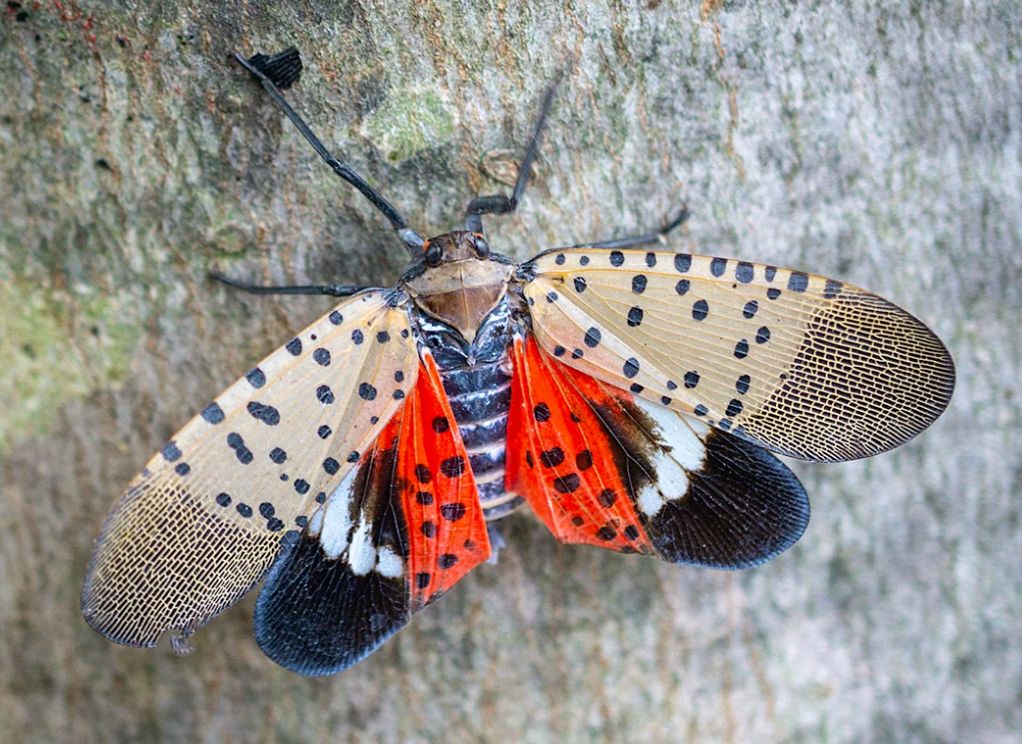
Courtesy of Wine Spectator Magazine
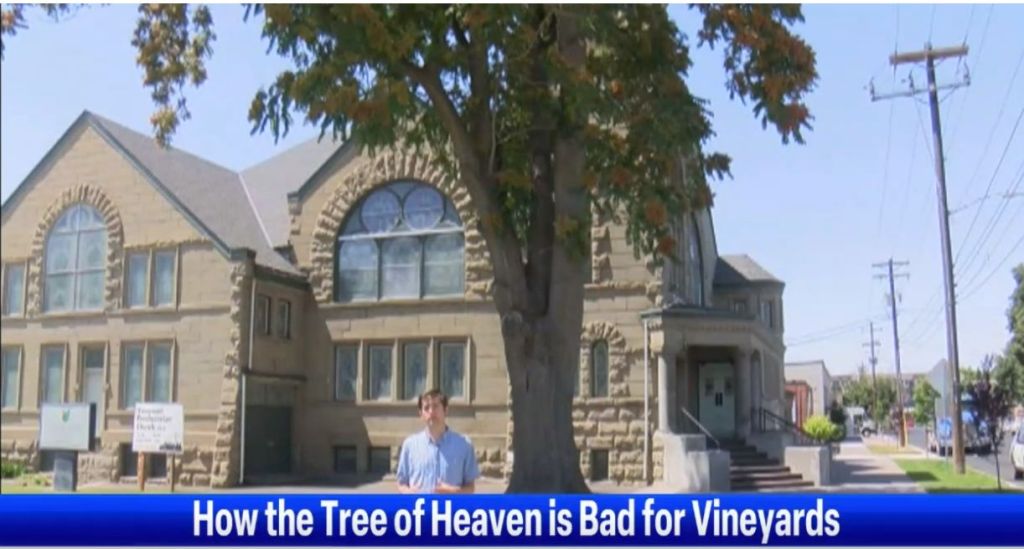
Vine-Killing Spotted Lanternfly Continues to Spread
The insect doesn’t eat vines. It uses its proboscis to reach the sweet sap inside, drinking its contents and leaving behind sticky waste, euphemistically referred to as “honeydew,” which coats the plant, disrupting photosynthesis and attracting mold..1
The Effects of slf feeding
SLF feed on plant phloem tissue (sap) using piercing-sucking mouthparts. Current research suggests that they prefer plants with significant turgor pressure, which could help explain why they favor grapevines. SLF utilize the nutrients provided by the plant and also rely on bacteria in their guts to help digest sap. When SLF feed in high numbers on grapevines, photosynthesis and sap flow in the plant is reduced. Heavy SLF feeding can also decrease the amount of carbohydrates (i.e., starch) and nitrogen stored in root tissues in the fall, which might compromise vine health and growth in the following year. Reductions in fruit sugar accumulation and in macro- and micronutrient concentrations in leaf tissues were also reported by the end of the season following heavy SLF feeding.2
The Worst Invasive Species The U.S. Has Seen in 150 Years

why Walla Walla is a perfect host city for the SLF
The ghetto palm (one of numerous names for Ailanthus) was introduced a second time, this time in California, in the 1850s. It is reasonable to believe that the first Ailanthus in Walla Walla were planted as ornamentals at Whitman College in the early 1900s.
From there it rapidly spread in all directions and infestations can now be found in nearly every part of the city.
Ailanthus has long posed a problem for agriculture and for urban foresters. The literature is extensive on the formidable problems faced in management or eradication.
The arrival of the SLF has brought renewed urgency to the problem. We have urged our local tree managers to confront the Ailanthus problem, with no results thus far. Improper practices during infrastructure upgrades have only worsened the problem.
We now recommend that all the stakeholders — the city, the county conservation districts, the wine growers and producers, and others — join forces to form a focused strategy, as other communities in eastern Washington have already done. A cooperative effort is the best way to limit the effect of the SLF by destroying its primary host, Ailanthus altissima, Tree of Heaven.3
Below: Infestation below Little Theater. Colony originated on right (100% Ailanthus) and is spreading west into new ground below theater. New plants in left image are clonal sprouts and must not be cut or mowed. See ‘Control Strategies’ (video above) for guidance.
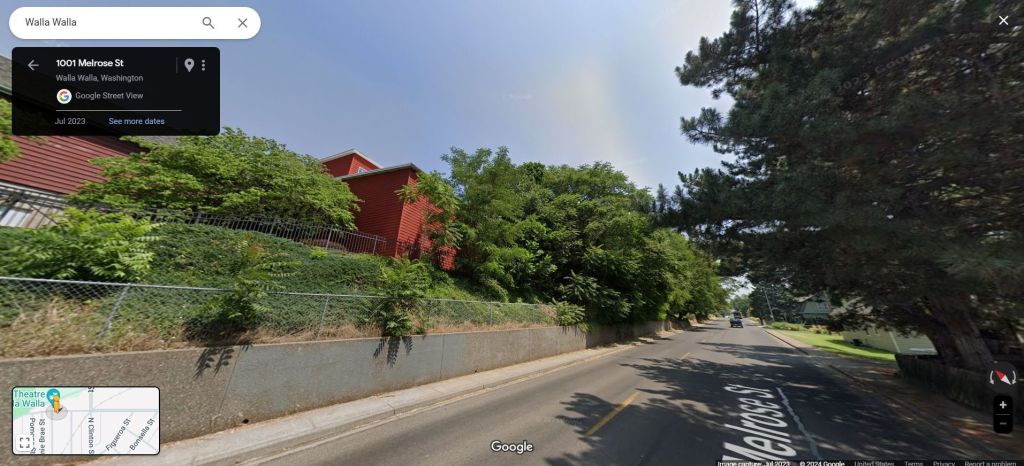

This is one of many such infestations in the city.
Ailanthus infestations in Walla Walla are predominantly within the city but are spreading into agricultural areas, notably along Russell Creek Road to the east.
Notes:
- Vine-Killing Spotted Lanternfly Continues to Spread, Wine Spectator
- Spotted Lanternfly Management in Vineyards, Penn State Extension
- One example of an effective coordinated response in the Columbia Gorge region is the Ailanthus Control Project in the Underwood Conservation District.
Sources
Tree-of-heaven and the Spotted Lanternfly: Two Invasive Species to Watch, Penn State Ecosystem Science and Management
Tree-of-Heaven, Penn State Extension
Spotted Lanternfly Management in Vineyards, Penn State Extension
USDA Releases Five-Year Strategy to Combat Spotted Lanternfly
How The Tree-of-Heaven is Bad for Vineyards, Non-Stop Local News
The Spotted Lanternfly Threatens Many Fruit Crops and Trees, WSDA
Tree-of-Heaven Control Project, Underwood Conservation
 Tree People of Walla Walla