
Witold Rybczynski decided to build a boat.
He couldn’t build a boat in the basement. He would need a place to build the boat, so first he would have to build a nice shed or small barn. And since he lived in the city he would have to buy a small property out of town. He would undoubtedly be staying overnight on weekends, so he’d need a room to sleep in.
His wife would be staying with him on those weekends in the country, so the structure would require the comforts of a home. That meant a full kitchen. And a laundry room.
In 1989 Rybczynski published a slim volume titled “The Most Beautiful House in the World”. The book is the author’s account of the lengthy process of turning his thoughts into a home. But the book is not a manual of how to build a structure. It would ruin the pleasure of future readers if I were to reveal the secret of the most beautiful house in the world. Rybczynski’s book is an elegant inquiry into the nature of beauty.

Which brings us to the question: Which is the most beautiful tree in the world?
First we must establish a few criteria on which to base our choice.
- A most beautiful tree can be of any species whatsoever.
- It should not be a fastigiate or columnar tree, as they do not throw shade.
- The tree must not have been pruned or shaped, except in very rare circumstances. A tree can qualify as the most beautiful only if it has been left to grow to its own full potential without human intervention.
- The tree must not be a yellow or weeping cultivar, nor can it be a horizontalis cultivar. Glaucous forms (which occur naturally) are allowable.
- Small, ornamental flowering trees (ie, dogwoods) should not be considered. They are so common they have become an unwelcome cliché. Some flowering trees, for example magnolias and Japanese cherry trees, are excepted from this rule.
- Trees with ostentatious leaves showing signs of human manipulation, such as the Tri-color Beech, should not be considered.
For some of us, the most beautiful tree in the world is one that lives in memory. The old Sugar Maple in the back yard that we climbed to the top of as a child, a lifetime ago. Or the tree, whatever kind it was, outside the window during our honeymoon. These are perfect trees, trees that cannot be improved upon.
It is generally agreed that the Coast Redwood is a magnificent, awe-inspiring tree; the Sierra Redwood, in addition to its great size, has a perfection that could only be created by divinity.
But different trees speak to us in different ways. This morning I asked Gayle which is her most beautiful tree. It took only a moment for her to respond with Bolleana poplar.
If I were to ask the same question tomorrow I might receive an altogether different answer.
One tree often cited as the most beautiful is the Socotra dragon tree (Dracaena cinnabari), also known as the dragon blood tree. The native range of the Dragon Tree is the 80-mile long island of Socotra in the Arabian Sea, primarily on the limestone plateau named Rokeb di Firmihin

The tree is named for the dark red resin, called dragon’s blood. The resin was highly prized in the ancient world and is still used today as an abortifacient, among dozens of other uses.

Wikimedia Commons
Gayle, however, was quick to point out that it’s not reasonable to recommend any tree as the most beautiful, even one as stunning as the Dragon Tree, if we have not experienced it in its natural setting.
The english hawthorn
It is rumored that when the Victorian art critic John Ruskin experienced the beauty of the Sistine Chapel he was so overcome that he fainted. Perhaps Ruskin fainted because beauty can not be understood, even when we are in its presence.
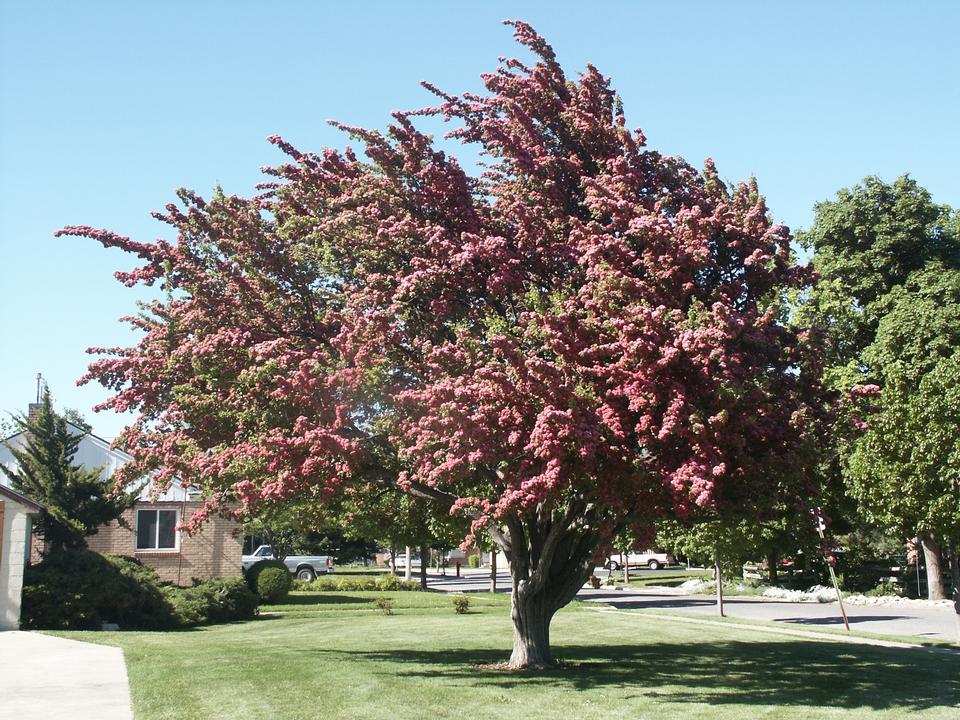
I have yet to faint when experiencing any tree. But one tree that never fails to move me is the English Hawthorne.
Several decades ago Hawthorns were desirable street trees in small towns across America. Perhaps it was a time when we held simple values, like rugged individuality, in high regard. Hawthorns have since fallen out of favor, but the remnants of these trees can still be found.
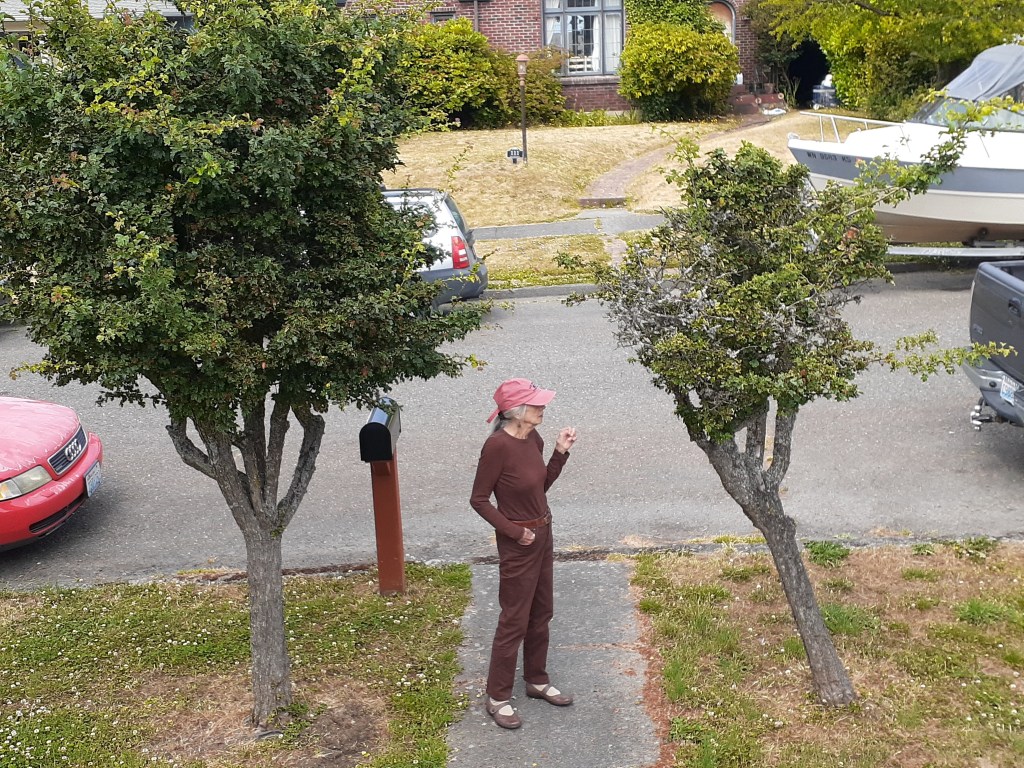

Hawthorns are thought to be scruffy, untamable trees, a view held even by some close friends. They have thorns, and the birds that frequent Hawthorns for the berries leave a mess.
Because of this many of the surviving Hawthorns have often been cut into balls. Unfortunately, for many people today, the only experience they have of hawthorns is to walk by brutalized stumps like those above.
Rarely do we find a Hawthorn that has reached maturity without severe pruning.
Comparisons are, of course, odious.1 This is especially true when considering genius, human beauty, children, pets, or trees. Comparisons can lead to insult, personal injury, and long enduring resentments. Yet we are drawn to making comparisons as a moth is drawn to the flame.
Fortunately, the world is so full of beautiful trees that we are each entitled to our own choice, and to changing that choice on a moment’s whim.

Copyright: © 2023 Diane D. Miller, Nature Photographers Network


Laying a hedge
The hawthorn is a dominant species in English hedgerows. Evidence suggests that hawthorns were used since the Neolithic period to build the hedgerows which still grace the British countryside.
In the video below, a Northamptonshire hedger is ably assisted by a smiling land girl eager to learn the rural craft of hedge making and maintenance in this gentle instructional film, made by the Realist Film Unit for the Ministry of Agriculture.
Note
- The phrase is attributed to John Lydgate, circa 1440. Shakespeare used a version of the phrase in Much Ado About Nothing,
sources
The Most Beautiful House In The World; Witold Rybczynski, 1989
A Shelter for Dreams; by E.V. Walter, NYT, May 21 1989
Architect Adapts Reality to His Changing Dream; By Christopher Lehmann-Haupt, NYT May 15, 1989
Black Hawthorns, Native Plants PNW
 Tree People of Walla Walla

I think your first picture is bark of the lacebark pine, which I believe is the most beautiful tree species in the world. It is one of 40 species of trees in our yard in Walla Walla. Cheers, Bob